
Overgrown Acreage Full of Brush and Saplings? Forestry Mulching Explained

July 22, 2026

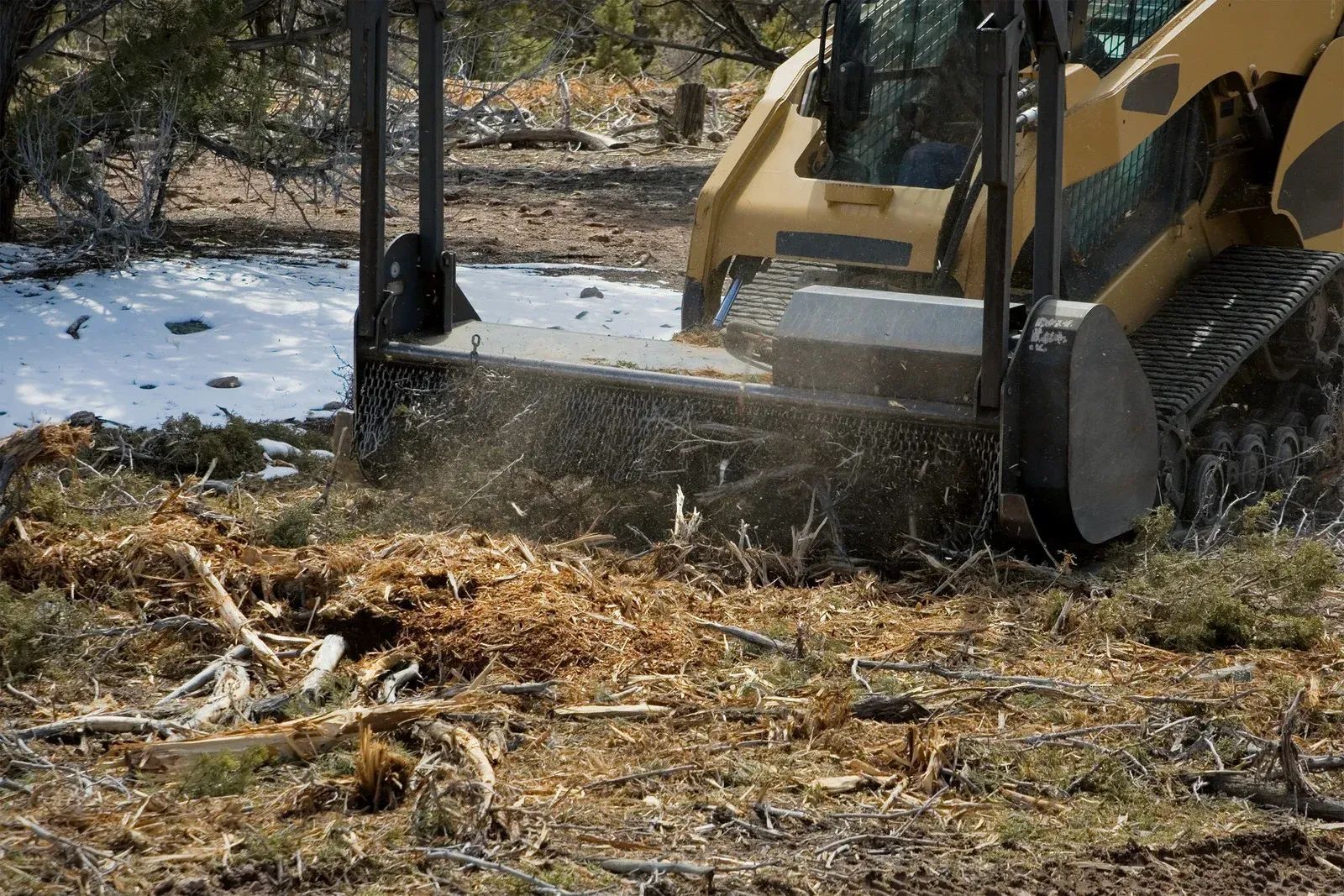
Quick Answer: Forestry mulching uses a rotating drum mounted on a skid steer or tracked carrier to grind standing brush, saplings, vines, and small trees into mulch right where they stand, instead of pushing everything into a burn pile or hauling it off the property. Most mulching heads process material up to 6 to 10 inches in diameter in a single pass, and the shredded material stays on the ground as a protective layer rather than leaving bare, exposed dirt. On North Georgia acreage, that matters because red clay slopes wash out fast once the brush holding them together is gone. A property that's grown up in saplings, kudzu, and privet for a few seasons can typically be opened back up in a day or two, depending on density and terrain, with no stumps left behind and no debris pile to deal with afterward.

If you haven't walked the back half of your property in a year or two, you might not recognize it. What used to be a mowed pasture edge or a clear tree line has filled in with waist-high saplings, tangles of privet, and vines climbing every trunk they can reach. North Georgia doesn't give ground a break — the growing season runs long, the rain keeps coming, and the moment a patch of land stops getting maintained, the woods start taking it back. Most owners already know the property needs work. What they're really asking is what to do with acreage that's gone from a little overgrown to a wall of brush you can't walk through, let alone use.

Signs Your Acreage Has Crossed Into “Needs Professional Clearing” Territory

There's a difference between a yard that needs mowing and a property that's reverted to brush. A few signs tend to show up together.


Fence lines you can't find

If privet, blackberry cane, or sapling growth has swallowed a boundary fence to the point where you're guessing at the property line, the brush has had more than one season to establish itself.


Vine curtains on standing trees

Kudzu and wild grapevine climbing 15 to 20 feet up a trunk, draping between trees, or matting across the canopy is a sign growth has moved past ground-level maintenance and started competing with the trees themselves.


Saplings thick enough to block sightlines

A former clearing or pasture that's grown a dense stand of pine or sweetgum saplings — thick enough that you can't see more than a few yards into it — usually means three to five years of unchecked regrowth.


Standing water where there wasn't any before

Dense root mats and downed brush can dam up natural drainage on rolling North Georgia ground. Pockets of standing water after a rain that weren't there a few years back are worth paying attention to.


Access that's disappeared

A road, trail, or gate that used to be usable but now takes cutting your way in means brush has closed off part of the property, whether or not anyone's noticed yet.


None of this is an emergency. But it's the point where hand tools and a weekend of sweat stop being realistic, and clearing equipment becomes the practical answer.

How Forestry Mulching Actually Works on Overgrown Ground

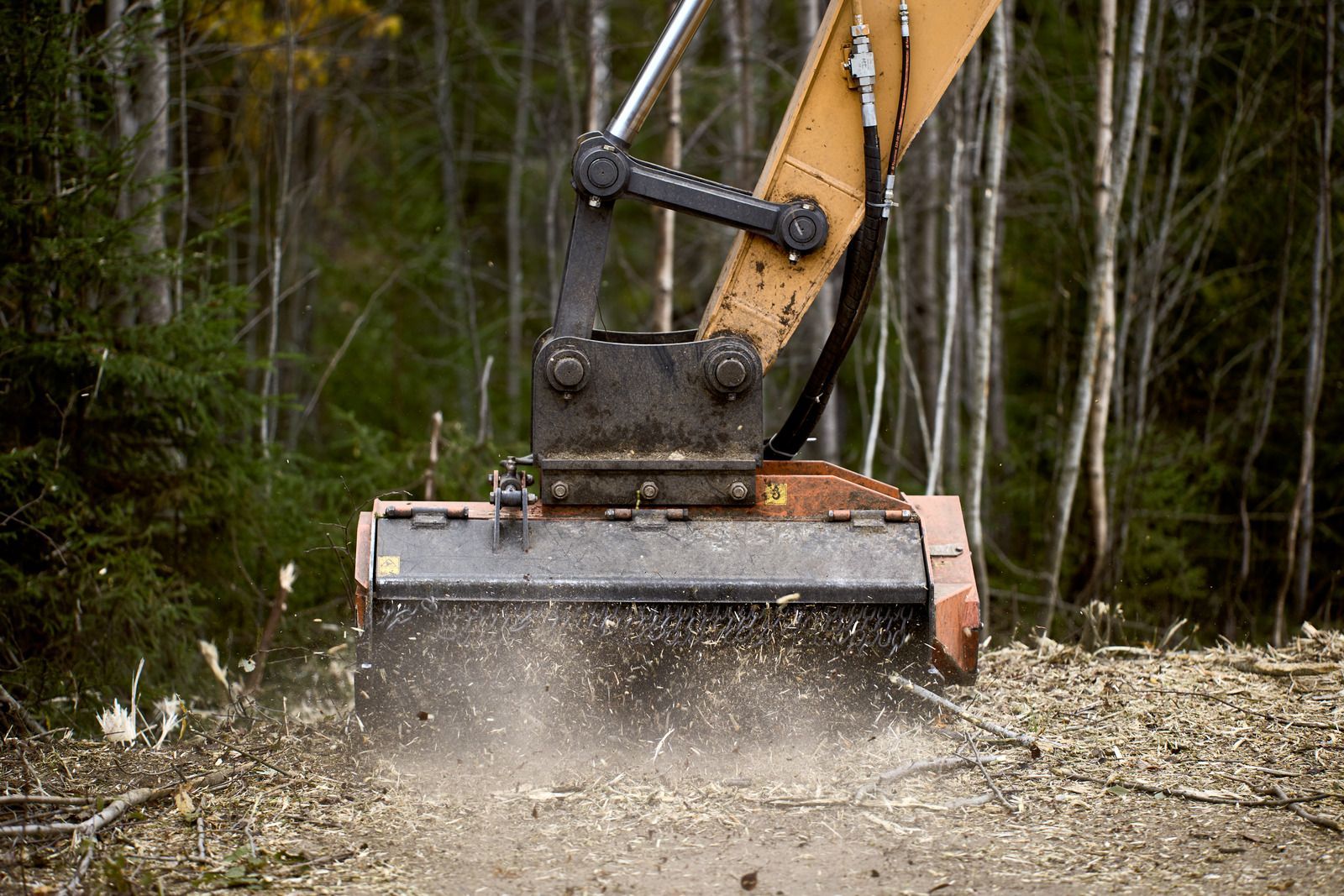
Forestry mulching is a one-machine process. A tracked carrier or skid steer runs a mulching head — a drum fitted with carbide teeth that spins fast enough to shred vegetation on contact — across the overgrown area, grinding brush, saplings, and small-diameter trees into mulch as it goes. There's no separate cutting step and nothing driven off site.


The walkthrough comes first

Before equipment moves, a crew walks the property. Keeper trees get identified, fence lines get marked, and buried or overhead utilities get noted so the actual density of the growth is understood, not just guessed at from the road.


The equipment handles most of what's standing

A mulching head typically processes material up to 6 to 10 inches in diameter in a single pass — that covers the bulk of what shows up on overgrown acreage: saplings, brush, privet thickets, cane, and smaller pines. Larger trees usually get flagged during the walkthrough and either left standing as keepers or handled separately.


Terrain shapes the approach, not just the timeline

North Georgia acreage is rarely flat. Rolling hills, red clay that turns slick after rain, and uneven ground near creek bottoms all factor into how a crew sequences the work, starting on stable ground and working toward wetter or steeper sections once footing and visibility are established.


Dense pockets sometimes need a second pass. Thick kudzu mats or tightly packed sapling stands can take longer to fully process, especially where vines have wrapped and matted together instead of growing as individual stems. By the time a crew finishes a section, what was standing brush a few hours earlier is a layer of shredded mulch across open, walkable ground.

What's Left Behind — and Why It Beats Hauling Everything Away

The biggest practical difference between forestry mulching and clearing methods that push brush into piles is what happens to the ground itself once the vegetation is gone.


The mulch layer protects bare soil

Instead of exposed red clay sitting open to rain, the ground is covered by a few inches of shredded organic material. On sloped acreage, that layer absorbs rainfall and slows runoff rather than letting water sheet straight down the hill.


Root structure stays mostly intact

The equipment grinds vegetation at or near ground level rather than digging it out, so existing root systems in the soil stay largely undisturbed. That helps the ground hold together on hills and near drainage paths.


There's no burn pile and no hauling

Traditional cut-and-stack clearing usually ends with a brush pile that gets burned or hauled off. Mulching skips both steps — the material stays put and starts breaking down into the soil.


Moisture retention improves

A mulch layer holds moisture better than exposed clay. That matters through a North Georgia summer, when clay ground can go from soaked to cracked and hard within a few dry weeks.


Bare dirt after a hard rain on a red clay slope is a mess most acreage owners have dealt with at some point. A mulch layer is what keeps that from happening again once the brush is cleared.

Tip: Walk your own property lines and flag any fencing, buried irrigation, or utility markers before a crew arrives. A quick walkthrough on your end saves time on-site and keeps anything you know about that a visual scan from the road wouldn't catch out of harm's way.

Where Mulching Fits — and Where It Doesn't

Forestry mulching suits acreage that's grown up in brush, saplings, and vines and needs to come back to usable ground without stripping the soil bare. It's not the right tool for every situation, and it helps to know the edges of what it does.


Mulching is not a substitute for grading or a build pad. It opens up the ground and improves visibility for planning, but it doesn't move earth, level a slope, or create a compacted surface for a driveway or foundation. That's a separate phase of work once the brush is gone.


Root systems can survive for aggressive invasives. Privet, in particular, tends to send up regrowth from the root even after the visible thicket is ground down, since the roots themselves stay in the ground. Mulching knocks back the standing growth and opens the canopy, but a stand with an established root network may need a follow-up pass or ongoing mowing to keep it from filling back in.


Very large trees usually get handled separately, too. Mature hardwoods and big pines beyond what a mulching head can process in a pass get identified during the walkthrough and either preserved as keepers or removed through separate tree work.

Warning: Don't run a rented mulching attachment or brush cutter through overgrown ground yourself if you're not familiar with what's underneath the brush. Old fence wire, buried stumps, rock, and uneven footing hidden by tall growth are common on acreage that hasn't been walked in a while, and they're exactly what causes equipment damage and injury when an operator can't see what they're driving into.

Frequently Asked Questions

  • How thick of brush can forestry mulching handle on overgrown acreage?

    A mulching head typically processes standing brush, saplings, and small trees up to 6 to 10 inches in diameter in a single pass. Denser stands or tightly matted vine growth may need a second pass, but most of what grows in on overgrown North Georgia acreage — privet, cane, saplings, and smaller pines — falls within that range.

  • Will forestry mulching kill invasive vines and saplings for good?

    Not always. Mulching removes the standing growth and opens the canopy right away, but some invasives, privet especially, can regrow from surviving root systems. Land with an established invasive stand usually needs a follow-up mowing or maintenance pass after the initial mulching to keep regrowth from taking back over.

  • Can forestry mulching be used on hilly or uneven North Georgia acreage?

    Yes. Because the equipment doesn't dig into the ground or strip topsoil, it handles rolling terrain, slopes, and uneven ground better than heavier equipment that struggles to keep stable footing. Crews typically start on firmer ground and work toward steeper or wetter sections as conditions allow.

  • What happens to the mulch after clearing? Does it need to be removed?

    No. The shredded material stays on the ground as a protective layer that helps prevent erosion and holds moisture in the soil, breaking down naturally over time instead of needing to be hauled away or burned.

  • How is forestry mulching different from just bush hogging an overgrown field?

    A bush hog cuts vegetation at the surface and leaves the cut material and root systems intact, so dense brush and saplings tend to grow back fast. Forestry mulching grinds material down at ground level, including saplings and small trees a bush hog can't touch, and leaves it as mulch. That slows regrowth and clears woody growth a mower simply can't process.

  • Is forestry mulching safe to use near fence lines and existing trees?

    Yes, once the property has been walked and marked ahead of time. Crews identify fence lines, keeper trees, and known obstacles during the initial walkthrough so equipment can work around them instead of through them.

Expert Forestry Mulching for North Georgia Properties

Overgrown acreage full of saplings, privet, and vine tangles doesn't stay that way once it's mulched down to open, walkable, well-protected ground instead of bare, washed-out dirt. CR Land Services, based in Gainesville, Georgia, runs industry-grade mulching equipment across Gainesville and the surrounding North Georgia hills, bringing 5 years of experience, fully insured and familiar with how red clay and rolling terrain change the approach on every property. Get a walkthrough scheduled and find out what your acreage looks like once the brush is gone.

Excavator clearing gravel and dust on a forest road construction site
June 27, 2026
Forestry mulching preserves topsoil & prevents erosion. Choose eco-friendly clearing methods. Contact us for a consultation!
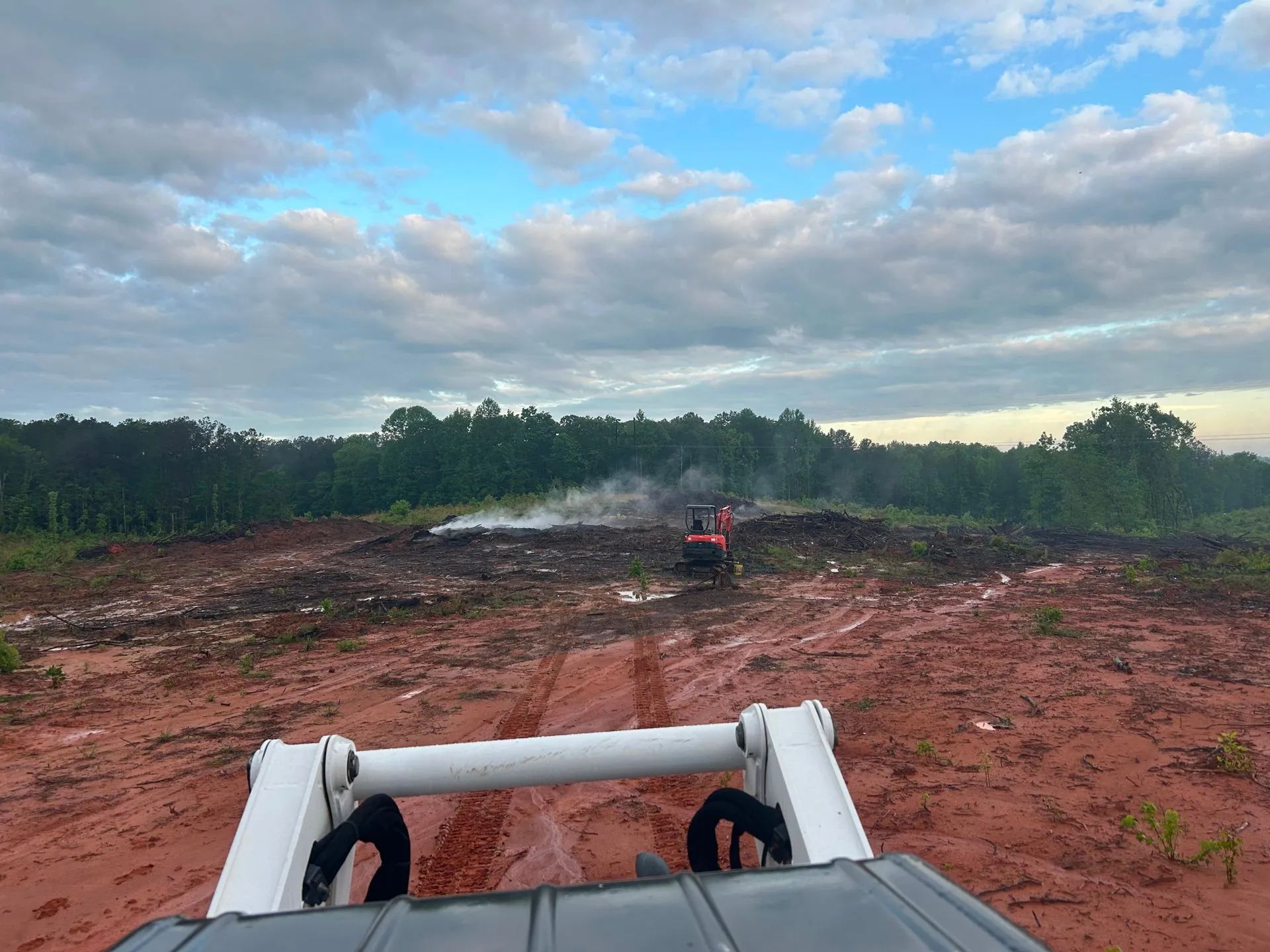
View from a vehicle on a muddy dirt road toward a red off-road vehicle under a cloudy sky
May 19, 2026
Land clearing is one of the most critical early steps in any development project, yet it is often underestimated in terms of its impact on overall timelines and budgets. Whether preparing land for residential construction, commercial expansion
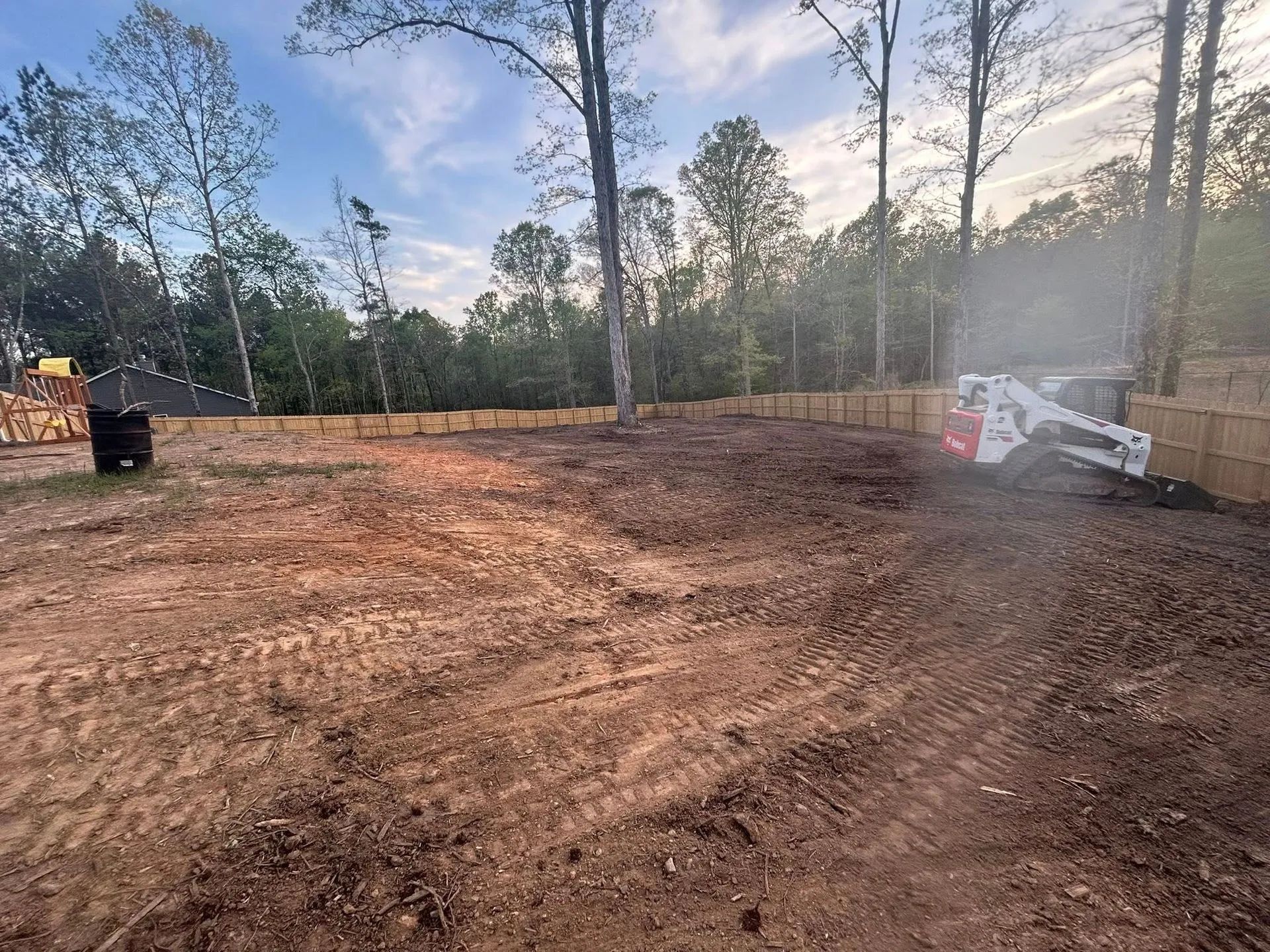
Cleared dirt lot with trees at sunset; skid-steer works on the right beside a black barrel on the left
April 26, 2026
Land clearing is a foundational step in preparing any property for construction, agriculture, or landscape development. Whether the goal is to build a new structure, expand usable land, or improve environmental conditions, the method chosen for clearing plays a critical role in determining project success.
Excavator clearing gravel and dust on a forest road construction site
June 27, 2026
Forestry mulching preserves topsoil & prevents erosion. Choose eco-friendly clearing methods. Contact us for a consultation!
View from a vehicle on a muddy dirt road toward a red off-road vehicle under a cloudy sky
May 19, 2026
Land clearing is one of the most critical early steps in any development project, yet it is often underestimated in terms of its impact on overall timelines and budgets. Whether preparing land for residential construction, commercial expansion
Cleared dirt lot with trees at sunset; skid-steer works on the right beside a black barrel on the left
April 26, 2026
Land clearing is a foundational step in preparing any property for construction, agriculture, or landscape development. Whether the goal is to build a new structure, expand usable land, or improve environmental conditions, the method chosen for clearing plays a critical role in determining project success.